

SafeHaven Campgrounds
Affordable Pay-to-Stay Campgrounds – Providing basic utilities to those with non-traditional housing.
The Safehaven Campgrounds Project is a concept project and a practical, community-driven response, conceptualized by our coordinator, Theresa Kelly, to the growing crisis of families, students, seniors, and workers living in cars, tents, and RVs. Traditional “affordable housing” is out of reach for many, but safe and sanitary campgrounds can be built and managed like city or county parks at a fraction of the cost.
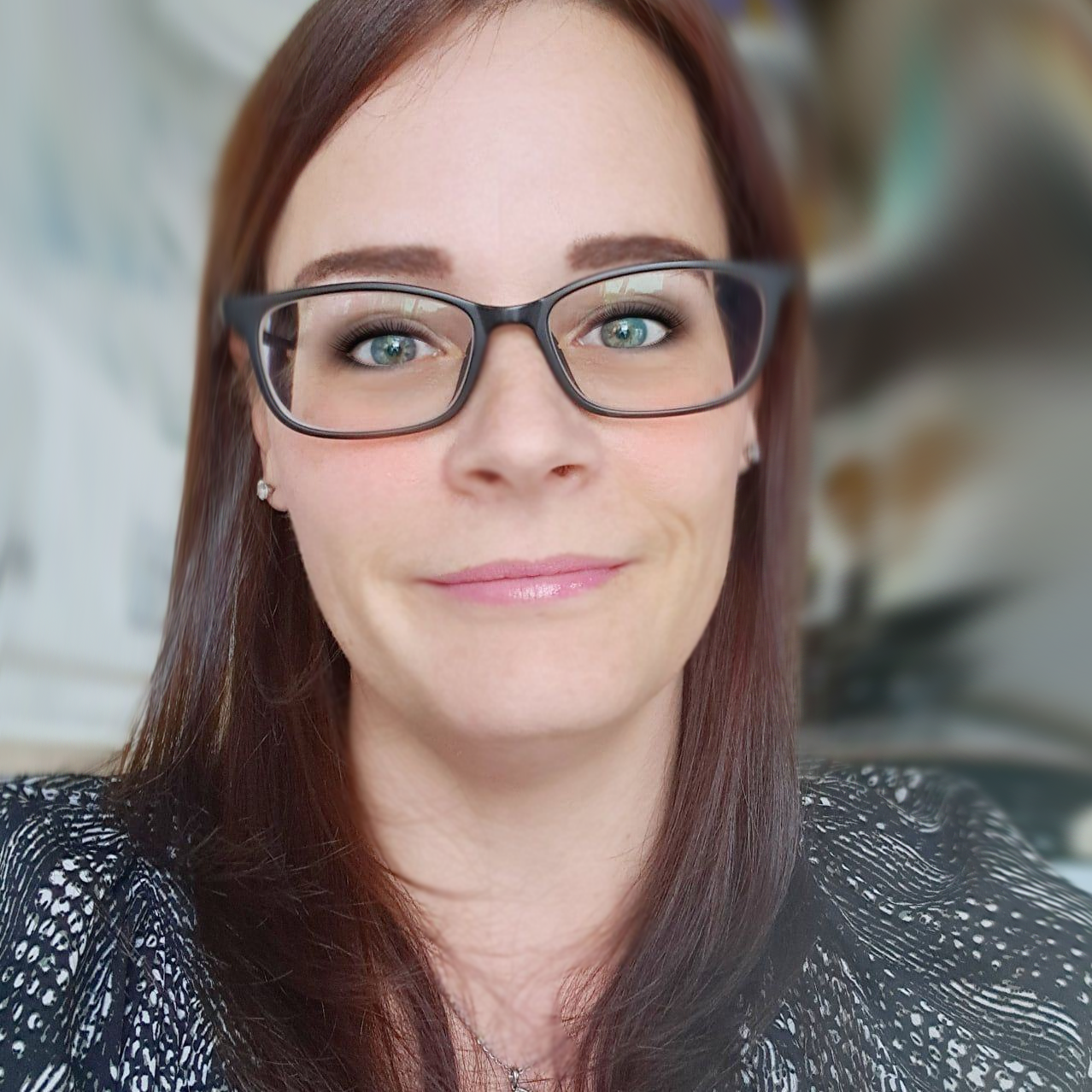
Theresa Kelly, Project Founder – Coordinator with The Red Bird Foundation, Inc.
These campgrounds provide the basics that restore dignity and stability: bathrooms, showers, electricity, water, trash pickup, internet, and security, while keeping families together and reducing stress on foster care, shelters, and emergency services.
This is not a handout; it is a “bring your own home” community where residents pay modest weekly or monthly fees, often through work income or Social Security. With rules, cameras, and management, these quiet, structured communities allow people to stabilize, save money, and move toward better housing if financially possible.
By building campgrounds for the poor instead of only more housing they can’t afford, we create a life raft that lets people start swimming to shore on their own. A practical, cost-effective, and humane solution that requires us to reimagine affordable living.
For those who are ready to live in a safe and stable community with:
- Basic Needs Covered – Having access to bathrooms, showers, clean water, and trash pickup is not just about comfort. It is about restoring dignity, protecting health, and giving people a foundation to rebuild their lives. When these basic needs are met, people can finally focus on work, education, and family instead of spending each day searching for where to bathe or where to go to the bathroom next.
- Dignity Through Shelter and Access to Utilities – These campgrounds are designed to be quiet, respectful communities where people feel safe. Rules, cameras, and on-site oversight ensure that residents can live without the constant fear that often comes with homelessness. By creating a stable and orderly environment, people who want a quieter, safer life can finally breathe, rest, and take steps toward recovery.
- Step Toward Stability – Unlike shelters that often only provide short-term relief, these campgrounds operate on affordable weekly or monthly fees. Residents gain access to electricity, water, internet, and other utilities that help them keep jobs, attend school, or stay connected with family. This “bring your own home” model gives people the chance to save money, move from a car into a van or RV, and eventually transition into more permanent housing. It’s not a handout, it’s a stepping stone to independence.

Basic amenities, safety and rules, basic utilities, and sustainability.
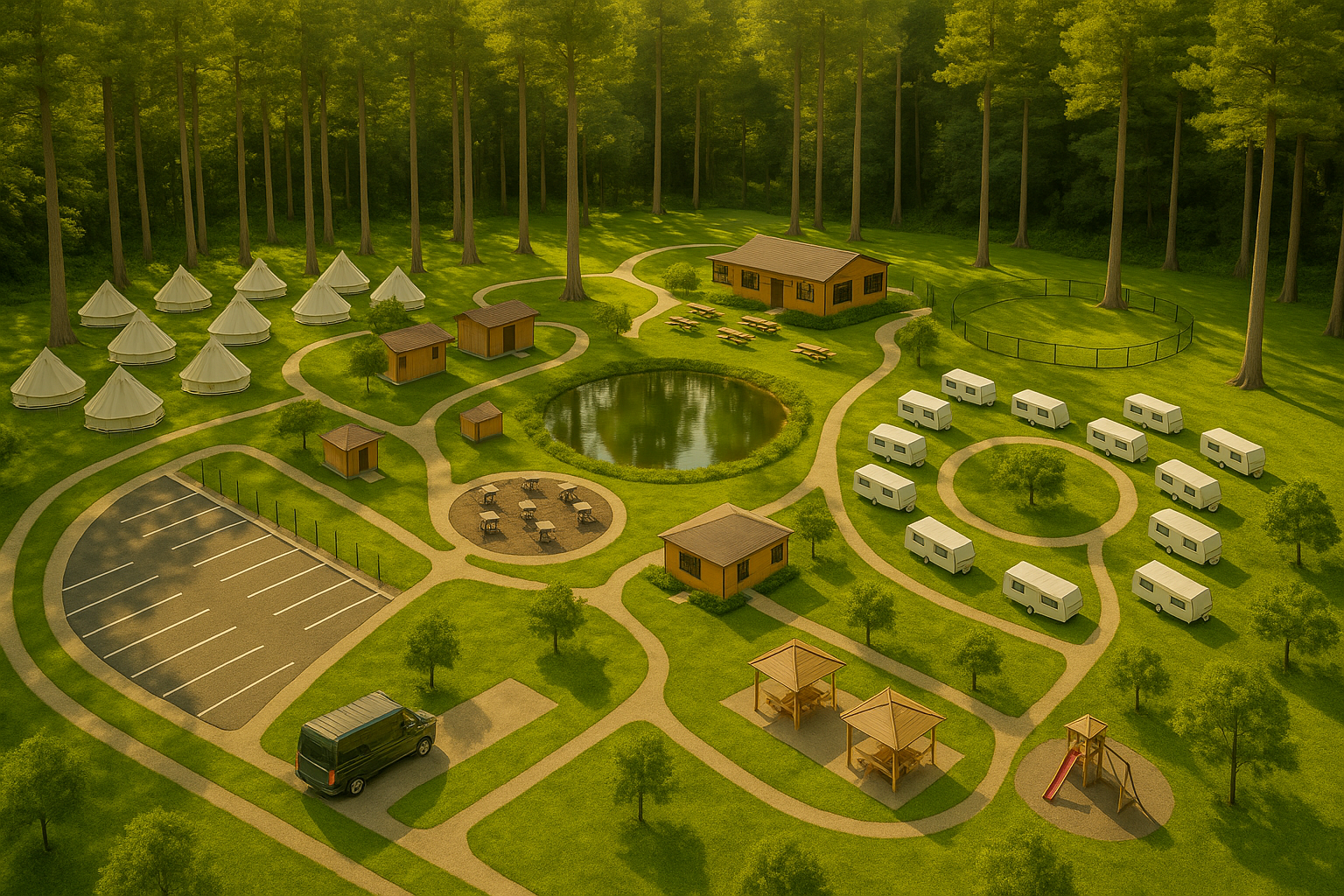
Additional Components: Business center pod, built on public transportation lines, green community initiative, picnic and cooking areas, community gathering, playgrounds for kids, dog parks, and walking paths.
For More Information: Please visit our Project Website or Download Our Materials
Project Updates
04/06/2026: We wanted to share an encouraging update on the Safe Haven Campground project, because South Carolina bill S.1102, the Authorized Temporary Shelter Sites Act, reflects many of the same core ideas behind the vision we have been working toward. The bill was introduced by Senator Adams on April 1, 2026, and was referred to the Senate Judiciary Committee the same day. The bill would authorize counties, municipalities, and other political subdivisions to establish regulated temporary shelter sites and include standards for sanitation, restrooms, showers, running water, safety, and oversight.
What makes this especially notable to us is that Safe Haven has always been rooted in a democratic socialist project concept centered on dignity, structure, and practical support, yet legislation built around similar ideas is now being introduced by a Republican lawmaker. That kind of cross-ideological overlap is meaningful because it suggests these solutions may have the potential to be taken seriously across political lines. It is still early in the legislative process, so no outcome is guaranteed, but it is encouraging to see ideas so closely aligned with this project entering the conversation in South Carolina
How the Safehaven Campgrounds Idea Began
The idea for Safehaven Campgrounds began with lived experience.
When I was a teenager, I experienced homelessness in the Deep South. Back then, we did not have smartphones, apps, or laptops to depend on. We were lucky if we had a pager. But the basic struggles were the same ones people still face today: trying to find a safe place to sleep, a bathroom, water, shade, warmth, a shower, and somewhere to exist without being pushed away or arrested.
In the summer, that meant surviving 90-degree days and nights with high humidity without air conditioning. Have you ever tried sleeping in 90 degree humid weather? You’re soaked in sweat, the sweat is dripping all over you, you are miserable and feel like you cant breath right, you toss and turn all night long, only to wake up very dehydrated, no energy due to vitamin and electrolyte deficiency, and no sleep that could be considered restorative. It meant risking heat stroke every day and night, which could lead to permanent disability or death.
In the winter, it meant layering clothes and blankets and hoping to find somewhere warm enough to make it through the night. If not, it meant burning extensive calories shivering all night and likely getting little to no restorative sleep. I remember sleeping curled up in corridors with people I barely knew just to stay warm. One winter night was so cold that the person beside me had ice crystals forming in his hair. There is a point when you become so cold that you can no longer move and you die from hypothermia. If you wait to long without a plan, you may not see the light of day. The only plan if the shelters are full or not taking more people? Well, it gets pretty tricky, or illegal.
When it poured rain, we searched for awnings, stoops, parking garages, or any covered place where we might be allowed to stand without a business asking us to move along. Getting wet with no way to dry leaves you open to catching a cold or worse, pneumonia, foot rot, and so much more. Sometimes I washed up in a parking garage bathroom in the middle of the night when it was quiet, washing my underwear in the sink and drying it under the hand dryer.
Clean socks often came from the dollar store because washing and drying them was not always realistic. It’s hard to wash clothes if you only have the clothes on your back. And getting your clothes to a laundry mat and washing them when you have no money it not an option. So you can clean up your body, but you are still going to smell, and that alone highly limits you from being able to go into places to avoid elemental exposure.
Water was its own challenge. Sometimes we asked kind restaurants or businesses. Sometimes friends would go into coffee shops or bars and bring water out to us. Sometimes we had to spare change just to buy water. In South Carolina heat, especially when temperatures can feel like summer even outside of summer, staying hydrated and replenishing electrolytes is not a small problem. It is survival.
I also tried living in a tent in a wooded area outside of downtown. For a little while, it seemed like it might work. Then we left for a day to gather food and supplies. When we came back, our tent had been cut up and everything had been set on fire: our clothes, sleeping bags, and belongings. Everything was gone. That experience taught me something I have never forgotten. Camping alone can be dangerous because of weather, isolation, and wildlife, but also landowners and other people. Tent cities can be dangerous because of people, too. For women, seniors, disabled people, and anyone who cannot easily defend themselves, unsafe encampments can be devastating.
A person can have a tent, a sleeping bag, clothes, and everything they need to survive, then go to work and come back to find it all stolen or destroyed. They are forced to start over from nothing. They could be attacked and end up in therapy with PTSD for years. If medications and therapy don’t work, they may turn to drug and alcohol to escape their reality. Now you have a person suffering with homelessness, addiction, and trauma trying to start over.
Eventually, I was able to get a car so I had something to live in. It gave me a little more safety and stability. I made curtains from fabric I bought and hand sewed so people could not see me sleeping inside. I could park at city parks overnight, but I still had no electricity. I could not run a fan through the night when it was dangerously hot, and I could not run a heater when temperatures dropped into the 20s or 30s. During the day, I had to search for shaded parking that was not metered, which was difficult downtown. Sometimes there was nowhere to go, and I ended up outside burned by the sun.
Safehaven Campgrounds came from asking a simple question:
What if there had been a safe, legal, structured place for me to go?
What if I could have plugged in a fan or a small heater? What if there had been clean bathrooms, showers, drinking water, and a safe place to park? What if I could have charged a phone or laptop? What if there had been Wi-Fi, basic rules, security cameras, and a stable location where people were not constantly being pushed from one place to another?
Today, phones are not luxuries. People need them for work, safety, job applications, medical appointments, case management, transportation, and connection to resources. Not everyone can get to a library. Not everyone has reliable transportation. In places like Summerville, where public transit is limited, being without a stable place to charge a phone or access the internet can keep people trapped.
The Safehaven Campgrounds model is not meant to replace emergency shelters. Shelters are still needed for people in acute crisis. This idea is for people who are already stable, close to stable, were recently stable, or ready to become stable: people who are working, looking for work, living on disability, living on retirement, staying in vehicles, or trying to survive in tents or yurts because housing has become unaffordable.
For the model to work, it has to be affordable. A person working full-time near the poverty line should be able to use it. Someone living on Social Security Disability or low retirement income should be able to use it. If seniors, disabled people, and our working poor neighbors cannot afford it, then the model fails its purpose.
It also has to be placed where people can actually rebuild. That means access to public transportation whenever possible or shuttles, especially for people in tents who do not have vehicles. Without transportation, people become isolated. They cannot get to work, appointments, get food, or services. They cannot move forward, only backward.
As the idea developed, I also learned how important language and presentation were. When people hear the word “homeless,” many immediately picture chaos, drugs, trash, needles, crime, and falling property values. But when we talk about neighbors in non-traditional housing who need a safe, regulated place to stabilize, people listen differently.
That is why Safehaven Campgrounds is built around structure, dignity, and accountability. It is not an unmanaged encampment. It is a regulated model with clear rules, assigned spaces, sanitation, restrooms, showers, utilities, safety procedures, security measures, and zero tolerance for violence, drug activity, or dangerous behavior.
Even the vision matters. This should not look like a forgotten field of tents. It should be designed as a safe, clean, peaceful place with trees, shade, landscaping, walking areas, and, where possible, water features or fishing access so people can supplement food needs. The goal is not simply to give people a place to exist. The goal is to give them a place to stabilize, breathe, work, heal, and rebuild.
Safehaven Campgrounds began with the question I wish someone had asked and fulfilled when I was young and homeless:
What would have helped me survive safely, stay clean, stay connected, and get back on my feet?
That question became a model. And if it can work here, it can become a practical path for communities everywhere.
 |  (843) 552-0976 RedBirdHope.org theresa@redbirdhope.org Summerville, South Carolina |